The short answer
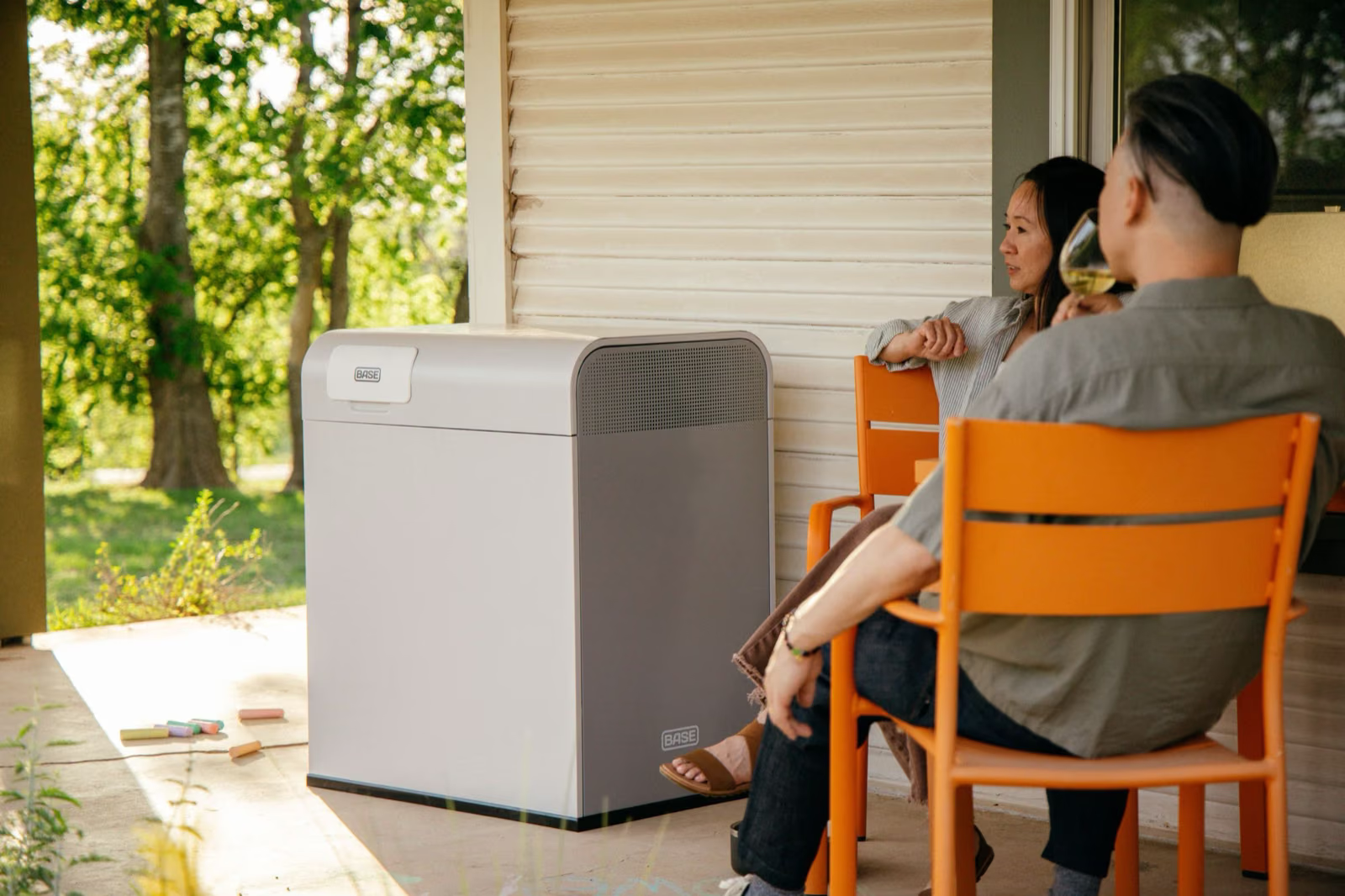
Base says that in some Texas territories it becomes the home's retail electricity provider and installs a battery. In municipal or cooperative areas, the existing utility may remain while Base only adds the battery service. Address eligibility determines which version is available.
What Base is doing differently
The battery can charge when energy is less expensive, hold a backup reserve, and sometimes send power back when the grid is under stress. Base says the system usually switches to backup in under half a second. It also says a single battery can provide up to 36 hours of backup, but the actual runtime depends heavily on household demand.
That is the trade: the customer gets installed backup capacity, while Base retains the ability to manage part of the battery around grid conditions. A battery that is not at 100% is not necessarily malfunctioning; it may be participating in that operating model.
Availability and plan structure vary by utility
| Texas territory | What Base currently lists | What to verify |
|---|---|---|
| Oncor | Energy + backup and energy-only options | Exact address eligibility, Electricity Facts Label, battery agreement, and all fees |
| CenterPoint | Energy + backup and energy-only options | Exact address eligibility, Electricity Facts Label, battery agreement, and all fees |
| AEP Texas Central / North | Energy-only plans on Base's current pricing page | Whether battery service is separately available at the address |
| TNMP | Energy-only plans on Base's current pricing page | Whether battery service is separately available at the address |
| Municipal / cooperative utility | Battery service may be offered while the utility remains | Who bills for energy, who owns the battery, and agreement terms |
Base publishes current Electricity Facts Labels and service documents. The Texas Electricity Facts Labels visible during our August 2026 review included 36-month documents. Rates and availability can change, so use the address-level quote and read the current documents rather than relying on an old screenshot or social ad. You can also review our Base Power provider record, which is generated from the same verified plan-data system used across the site.
Where to find Base Power Electricity Facts Labels and how to read reviews or complaints
Start with Base's official Electricity Facts Label library. Choose the current document for the home's delivery territory, then check the contract term, prices at several usage levels, early-termination fee, base charges, and delivery-charge treatment. The address-level offer and current Electricity Facts Label matter more than an old quoted rate.
When reading Base Power reviews or complaints, separate the issue being described. A comment about battery installation is different from one about the retail electricity bill, backup runtime, customer service, or moving and equipment removal. Look for repeated themes, then compare them with the current Electricity Facts Label, battery agreement, and written offer instead of treating one review as a complete verdict.
What happens if you move?
Base says the battery agreement runs with the home. If the buyer accepts Base, the arrangement can transfer; if not, Base says it will remove the system. That makes the move clause important. Before signing, ask how notice works, whether removal has a cost, what happens during a home sale, and whether any obligations survive the retail electricity contract.
Questions to answer before signing
- What is the current electricity-plan term, average price at several usage levels, early-termination fee, and delivery-charge treatment?
- Is there a separate battery agreement, membership fee, installation charge, or cancellation obligation?
- Which circuits and appliances can the system support, and what loads could keep it from turning on?
- How long might backup last at your household's typical outage load, not the maximum marketing scenario?
- Who owns, maintains, monitors, insures, and removes the equipment?
- What happens if you move, sell the house, change electricity providers, or no longer qualify?
- Is your exact address eligible for one battery, two batteries, energy-only service, or no installation?
Compare the electricity contract before the battery pitch
Start with the current plans available for your address, then compare total cost, contract terms, and backup value.
Our take
Base is a genuinely interesting model for a homeowner who values outage protection and understands the grid-services arrangement. It is not automatically the cheapest fit for every usage profile, and “up to” backup claims should never replace a load-specific estimate. Compare the retail plan and the battery agreement as two connected decisions.
Sources reviewed August 5, 2026: Base Power's How It Works, plans by area, and Electricity Facts Label library. Base identifies its Texas REP as PUCT #10338. I Moved to Texas has no sponsorship or affiliate relationship with Base Power and did not receive compensation for this article. Product availability and terms can change.
Frequently asked questions
What is Base Power?
Base Power is a Texas energy company that can combine retail electricity service with an installed home battery in eligible areas. The exact electricity and battery offer depends on the service address and utility territory.
Where can I find a Base Power Electricity Facts Label?
Base publishes an official Electricity Facts Label and service-document library. Select the current document for the home's delivery territory and compare its term, prices at several usage levels, fees, and delivery-charge treatment with the address-level offer.
How should I evaluate Base Power reviews and complaints?
First identify which part of the experience the reviewer is describing: the retail electricity plan, battery installation, backup performance, customer service, or moving and removal. Then compare repeated themes with the current Electricity Facts Label, battery agreement, and written address-level offer.